The Road Trip Is Already a Story
June 15, 2026 · 6 min read
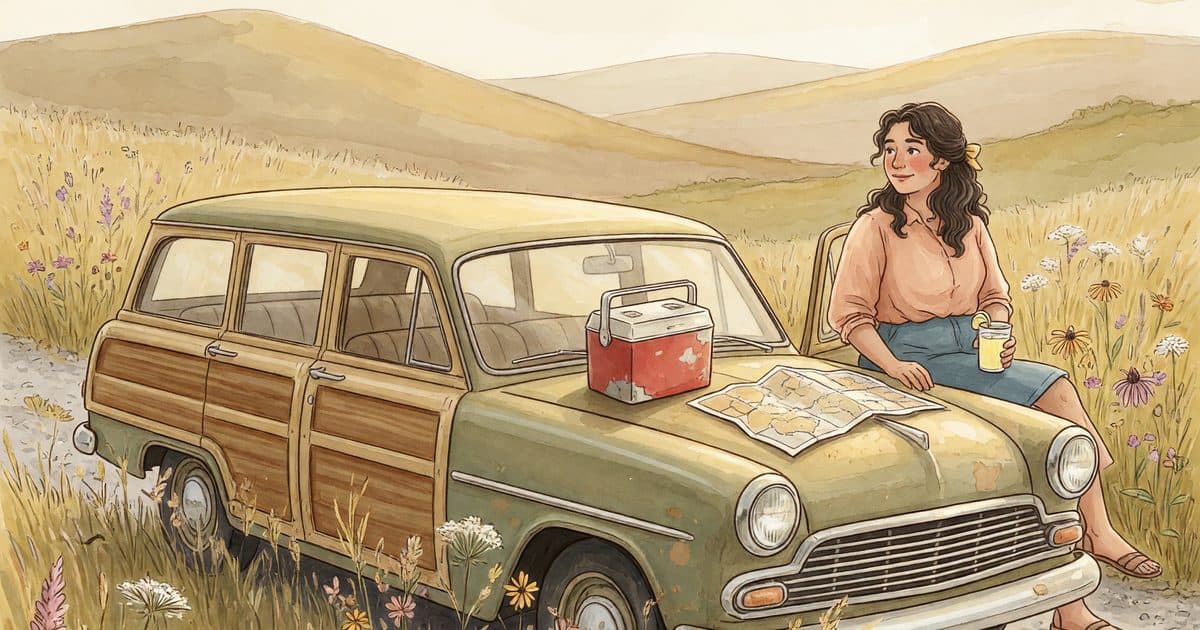
There's a version of the family road trip that lives in the planning: the route, the stops, the playlists loaded the night before. And then there's the version that actually happens. The gas station that turned out to have the best beef jerky anyone had ever eaten. The detour that led to a lake nobody knew existed. The backseat argument that somehow became an inside joke before you crossed the state line.
That second version is the one worth keeping. And it already has everything a story needs.
The Journey Has a Shape
Every road trip, even a short one, has a natural story arc. There's a departure, full of anticipation and last-minute forgotten items. There's a middle that surprises you. And there's an arrival that feels earned in a way a flight never quite does. That shape is why road trips stay with us the way they do. You move through the world together, and the world gives you things you didn't ask for.
A book built around a trip follows that same shape. It doesn't need to cover every mile or every hour. It just needs to hold the moments that made the journey feel like yours: the specific, slightly ridiculous, completely unrepeatable details that your family will recognize instantly and nobody else would quite understand.
If you've ever seen what one of these books looks like, you'll notice that the stories that land hardest are never the big scenic highlights. They're the small, true ones. The moment a child spots something out the window and everyone cranes to look. The song that got stuck in rotation for three straight hours and somehow nobody minded.
What to Actually Write Down
The hardest part of turning a trip into a story isn't the writing. It's the noticing. You're in the middle of it, managing the sunscreen and the snack distribution and the playlist negotiations, and the good material is slipping by faster than you can catch it. A little intention before you leave can help more than you'd think.
Before you go, spend ten minutes thinking about the people in the car and what makes each of them distinctly themselves on a trip. Who always wants to stop? Who can't read the map? Who falls asleep before you've left the county? Those traits become the texture of the story. They're also, for any child who'll read it later, the earliest record of who they were at this exact age.
- The snacks that made it into the cooler and the ones that got left behind
- The songs or podcasts or audiobooks that played on a loop
- The unplanned stop that turned out to be everyone's favorite part
- Something funny or surprising one person said
- The first moment you knew you'd arrived, before you even pulled in
- What everyone wanted to do the second you got out of the car
None of these need to be written in full sentences in the moment. A note in your phone, a voice memo while someone else drives, a photo of the beef jerky display case: anything that jogs the memory later is enough to build from.
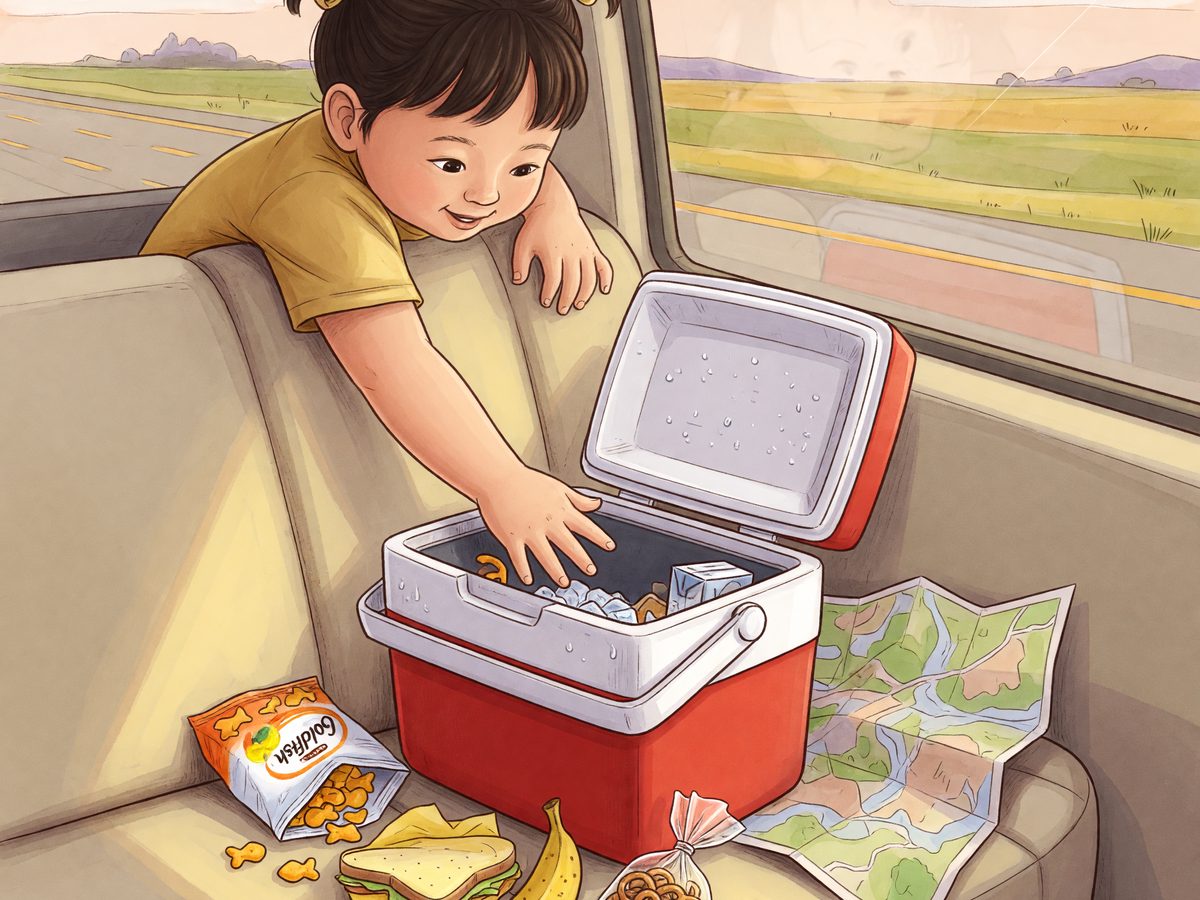
The Unplanned Stop Is Usually the Best Scene
Ask anyone about a road trip they remember, and they'll almost never describe the destination first. They'll describe the thing that happened on the way. The diner that looked questionable from the outside and served the best pie. The pull-off where everyone got out to look at something and ended up staying for an hour. The wrong turn that looped you through a town so small it only had one traffic light, and somehow it was charming.
These moments are unplannable, which is exactly what makes them worth preserving. They're the proof that the trip was real and alive, not just executed. For a child, reading about a moment like this later, the message underneath the story is a good one: that the best things often come from not being entirely in control, and that your family is the kind that slows down to look.
The detour doesn't ruin the trip. Sometimes the detour is the trip.
Who Gets to Be the Hero
A road trip story usually has an obvious main character: the child the book is for. But the richest books are the ones where the other people in the car come through clearly too. The parent who insists on getting an early start and then gets distracted by a historical marker. The sibling who hoards the window seat but always points out the best clouds. The grandparent riding along who keeps comparing everything to a trip they took forty years ago.
When you start building characters for a book like this, you're doing something that turns out to matter more than it first seems. You're deciding, consciously, how each person in that car will be remembered. Not perfectly, not sentimental to the point of being false, but warmly and specifically. That specificity is what makes a book feel true.
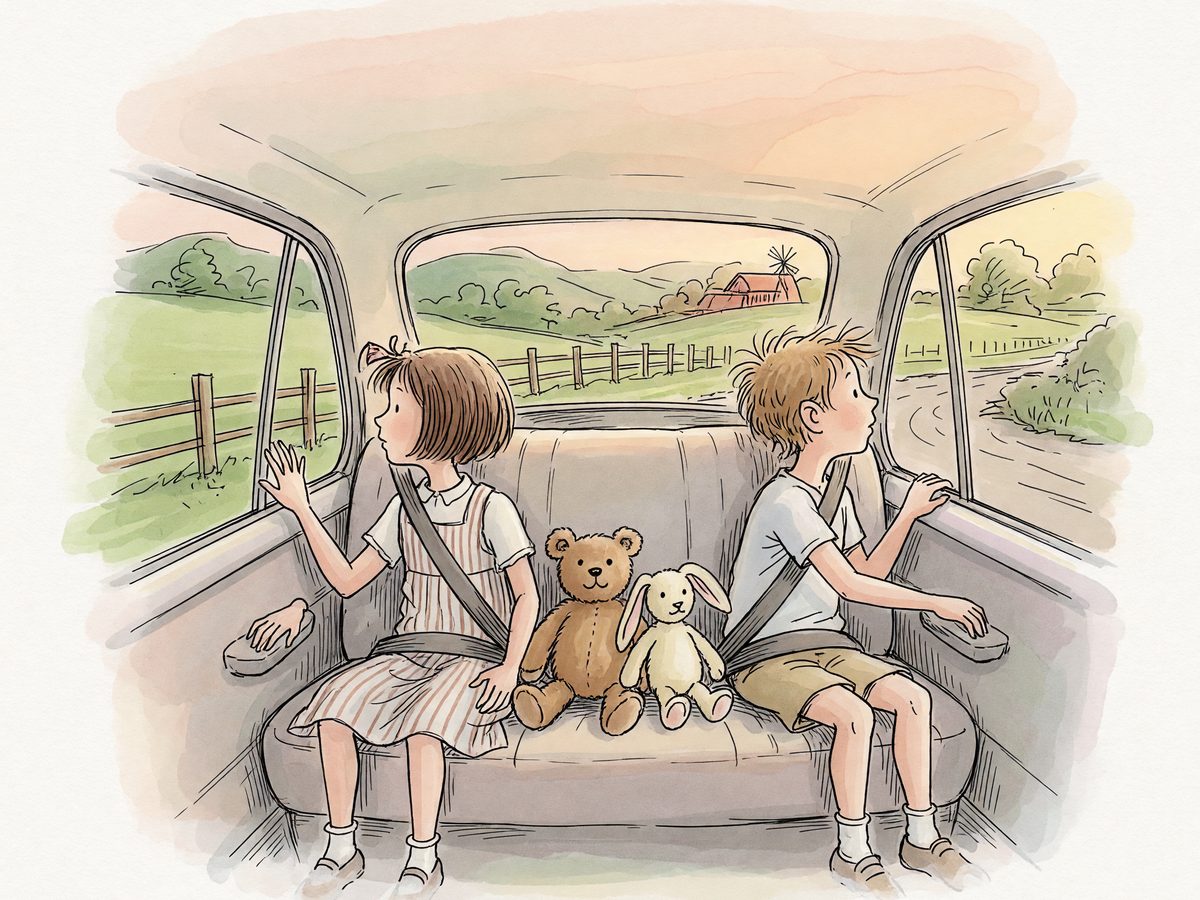
If there are siblings in the mix, their dynamic on a long drive is often already a whole story on its own. The negotiations, the territories, the moments when they're suddenly and completely on the same side against the GPS. A book that captures that is something both of them will want to look at again when they're grown. You can see how sibling stories come together when the material is real.
Making the Book After You're Home
The good news about turning a road trip into a book is that you don't have to do it while you're still on the road. The week after you're home, when everyone is a little tired and the laundry is in piles and someone keeps talking about the beef jerky, is actually a perfect time. The distance of a few days gives the trip a shape that's hard to see while you're in it.
Some families like to hand everything over: a few notes, a handful of photos for reference, the name of that unplanned stop, and let someone else shape it into stories while they rest. Others want to be in it from the first word, building each scene themselves and adjusting every detail until it sounds exactly right. You can read more about how the whole process works to get a sense of which feels like you.
Either way, the raw material is the same. It's the car, and the people in it, and everything the road gave you that you didn't plan for. That's already a story. It just needs somewhere to live.
Before the Summer Fades
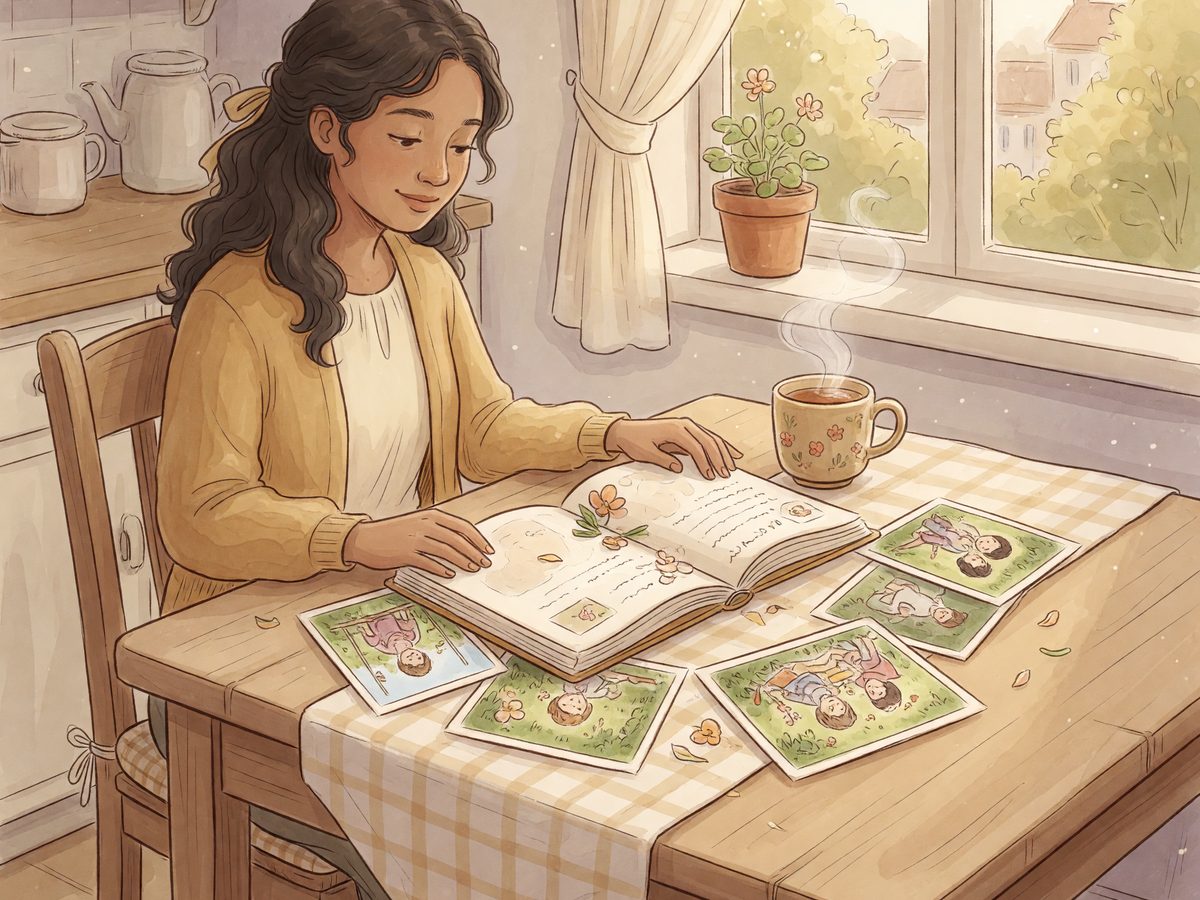
June has a way of feeling long when you're in it, and short when you look back. The trip you're planning, or just finishing, or already halfway through in your memory: it won't stay sharp the way it feels right now. The specific words, the exact quality of the light at that pull-off, the look on a child's face when something surprised them, those things soften faster than you'd like.
A book holds them. Not perfectly, not as a photograph does, but in the way a story does: with warmth and a little shape and the sense that it mattered. That's a different kind of keeping, and in some ways a better one.
Make a Book of Your Own
Start with one moment and the people in it. We write and illustrate the rest.
Start a Book