The Teacher Who Learns Their Name First
August 10, 2026 · 6 min read
In August the school supplies show up in the front hall: a fresh box of crayons, sneakers that haven't been scuffed yet, a folder chosen with real conviction. And somewhere across town, in a quiet room, a teacher is peeling the plastic off a new stack of nametags and taping a border around a bulletin board. Two people are getting ready for the same first morning. Neither has met the other yet.
That gap, the space between a child and the grown-ups who will spend the year with them, is a tender one. A small story can sit in that space. It can help a child picture a classroom before they walk into it, and it can tell a teacher, at the end of a long year, that the picturing worked out.
The Room Before the Room
A new classroom is mostly unknown, and unknown things loom large. A child doesn't yet know where the coats go, or what the bathroom pass looks like, or whether the teacher's voice is loud. They fill the blanks with whatever their imagination hands them, and imagination in August is not always kind.
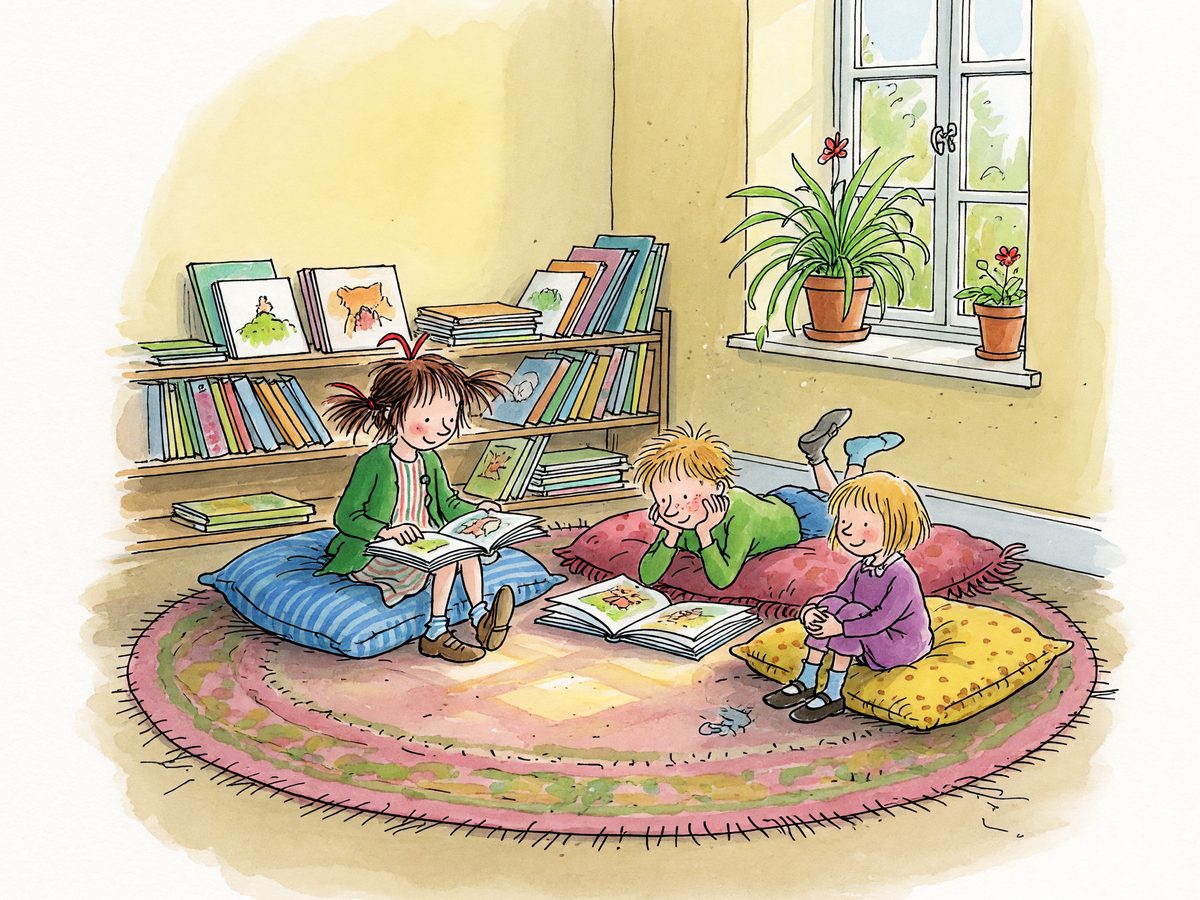
A story can hand them a gentler version to hold. Not a promise about the exact room, but a shape: a place with hooks for backpacks, a rug where everyone sits, a grown-up who learns your name and says it right. When a child has pictured a kind version of a thing, the real version has something friendly to land against.
You know your own child's particular worry. Maybe it's the noise, or the goodbye at the door, or the not-knowing-anyone. A story can quietly walk right up to that one worry and sit beside it, without ever making a big deal of it.
Making the Kind Grown-Up the Hero
Most stories about school star the child, and that's lovely. But there's a different book worth making, one where a teacher is the hero: the person who notices the quiet kid, who ties the shoe, who keeps a spare snack in the desk for the mornings that went sideways at home.
If you're building the cast yourself, you can put a teacher right at the center. When you gather your characters, you're deciding who the story is really about, and a beloved teacher earns that spot as honestly as any grandparent or family pet. Give them the mug they always carry, the reading glasses pushed up into their hair, the way they clap a little rhythm to get everyone quiet.
Children take grown-ups more seriously when those grown-ups turn up in a story. A teacher on the page becomes a fixed, friendly point in the year. And a teacher who is handed that same story, later, gets to see themselves the way a child saw them, which is not a small thing to receive.
A Thank-You That Isn't a Mug
Teachers get a lot of mugs. They get tote bags and hand lotion and gift cards, all kindly meant, most quietly forgotten by October. A book is a different kind of thank-you because it's specific. It's about this teacher, this year, this particular child who grew under their attention.
You don't need a grand plot. The best teacher thank-yous are made of the small, true things you'd struggle to fit on a card. A story can hold a whole year of them and still fit in a bag.
- The moment your child stopped dreading drop-off, and what the teacher did that helped
- A phrase the teacher says so often it now lives in your kitchen
- The project that came home covered in glue and pride
- The name your child gave the class hamster, and the ceremony it apparently required
- The first book your child read on their own, and where they were sitting
If you'd rather not build it from scratch, you can tell us who it's for and one moment worth keeping, and we'll write and illustrate it for you. There's a page of teacher gift ideas if you'd like a nudge on where to start, and it's worth glancing at a sample to see how short and simple these stories actually are.
Written by the Kid, Sort Of
There's a lovely version of the teacher thank-you where the child does the telling. You sit down together and ask a few open questions. What does your teacher do that you like? What's the funniest thing that happened at school? What do you want to say to them before summer?
Write down the answers exactly as they come, misremembered facts and all. Children describe their teachers with a clarity adults have mostly lost. They'll tell you the teacher has a laugh like a hiccup, or that she once cried at a picture book and then said it was allergies. Those are the details that make a story feel true, and they're the ones your child will be proudest to have put there.
From there it becomes something you shape together. You can go slowly, building and editing every page until it reads the way your child means it, which is what the hands-on way is for. A book made this way carries a small proof inside it: your child noticed. They paid attention to a grown-up who paid attention to them, and they had something to say back.
Keeping the Year Once It's Over
School years blur. By the time a child is grown, one teacher folds into the next, and the specific gifts of a single September go fuzzy at the edges. The nametag gets thrown out. The bulletin board gets a new border. The mug chips.
A story is a way of pinning one year down before it drifts. Not a scrapbook of everything, just one true thread: the teacher who learned the hard-to-say name and got it right, the room that turned out to be kind after all. Years from now, a child might not remember the whole grade, but they'll have the book that says a particular grown-up was good to them, once, in a way that mattered.
The teachers we remember are the ones who saw us clearly. A story is a way of returning the favor.
You can make it as the year begins, to help a child picture the room ahead, or hold it for June and hand it over as a goodbye. Both are good. Both say the same quiet thing: this person, this year, was worth keeping.
Where to Begin
Start with one image, not a plot. A child's hand in a bigger hand at the classroom door. A teacher waving from the rug. The exact height of the coat hooks. Stories built from one small, real picture almost always find their shape.
When you're ready, you can start a book and decide as you go whether you want to do the telling or leave it to us. Either way, you'll approve the way everyone looks before a single story is written, so the teacher on the page has the right glasses and the right laugh.
This year the supplies will get used up and the nametag will come home crumpled. But the grown-up who made the room kind is worth remembering longer than a school year lasts. A short book is one calm way to make sure they are.
Make a Book of Your Own
Start with one moment and the people in it. We write and illustrate the rest.
Start a Book